 synth
synthSpectrasonics
Omnisphere
A flagship hybrid synth and sound library spanning synthesis, granular, and thousands of sampled sources. The go-to for cinematic textures, evolving pads and inspiring patches across every genre.
At a glance
Genres
Spectrasonics' vast library-driven workstation versus Arturia's hands-on multi-engine synth, curated sounds against modern patch design.
Written and reviewed by Kasper Nods. Updated July 2026. How PlugPick reviews
PlugPick is reader-supported. We may earn a commission from links on this page, at no extra cost to you. Learn more
synthSpectrasonics
A flagship hybrid synth and sound library spanning synthesis, granular, and thousands of sampled sources. The go-to for cinematic textures, evolving pads and inspiring patches across every genre.
At a glance
Genres
 synth
synthArturia
A flagship hybrid synth with six engines, wavetable, virtual analog, granular, sampling and more, and a colour-coded, drag-and-drop modulation workflow. The most-cited modern Serum alternative.
At a glance
Genres
Artists who use it
Omnisphere's core asset is its library: over 14,000 professionally designed sounds spanning organic textures, hybrid instruments and huge cinematic pads, on top of a deep engine you can dig into when a patch needs reshaping. Composers and producers use it as an instant palette, and its psychoacoustic soundsources give it raw material no from-scratch synth ships with. Tourist has published his own preset packs for it.
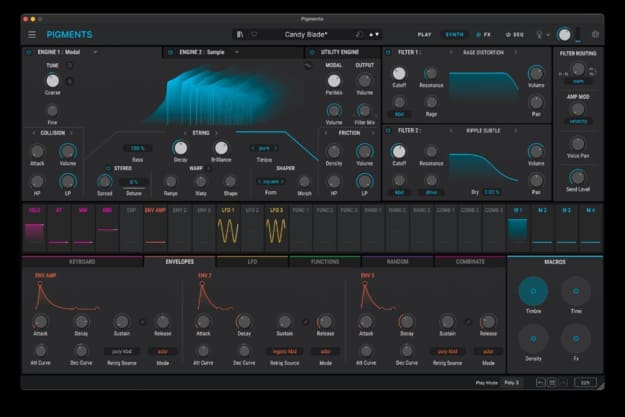
Pigments is the modern design-it-yourself option. It combines wavetable, virtual-analog, granular, sample and harmonic engines in one instrument with the most visual modulation system in its class, so complex, moving patches come together fast. Reviewers describe its sound as pristine, and at well under half Omnisphere's price it is one of the strongest value propositions in soft synths. Arturia's own artist stories feature producers like Flosstradamus building tracks around it.
The split is the same browse-versus-build divide as Omnisphere against Serum, but Pigments makes the price gap harder to ignore: it costs a fraction of Omnisphere and its multi-engine architecture covers a remarkable amount of sonic ground for producers happy to design their own patches.
What Pigments cannot replicate is the library. If your workflow is auditioning world-class sounds and layering them into cues and records quickly, Omnisphere remains unmatched. If your workflow is building sounds and you want several synthesis types under one roof, Pigments is the smarter spend.
Pick Omnisphere if you want an unmatched curated sound library and instant inspiration for cinematic and crossover work.
Pick Pigments 7 if you want to design your own patches across five engines at a far lower price.
Only partly. Pigments is a superb multi-engine synth for designing your own sounds at a much lower price, but it does not include anything like Omnisphere's massive curated library, which is Omnisphere's main value.
Omnisphere, because you browse a huge library of finished sounds and tweak from there. Pigments is easier than most synths to program thanks to its visual modulation, but it still expects you to build or adapt patches.
Yes, they complement each other well: Omnisphere as the instant palette of curated textures and instruments, Pigments as the hands-on synth for custom, evolving patches.