 synth
synthu-he
Diva
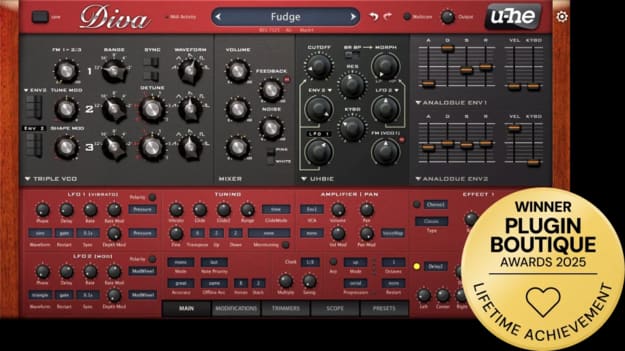
A CPU-heavy but breathtaking analogue synthesizer emulation. Five oscillator models, four filter models, each borrowed from legendary hardware. The most realistic virtual analogue available.
At a glance
Genres
u-he's celebrated analog emulation versus Arturia's clean multi-engine all-rounder, vintage soul against modern range.
Written and reviewed by Kasper Nods. Updated July 2026. How PlugPick reviews
PlugPick is reader-supported. We may earn a commission from links on this page, at no extra cost to you. Learn more
synthu-he
A CPU-heavy but breathtaking analogue synthesizer emulation. Five oscillator models, four filter models, each borrowed from legendary hardware. The most realistic virtual analogue available.
At a glance
Genres
 synth
synthArturia
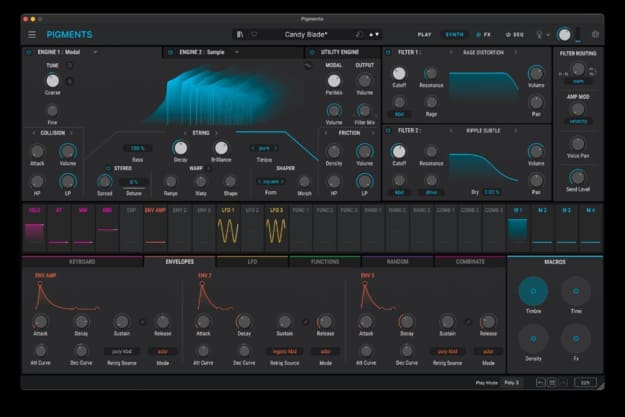
A flagship hybrid synth with six engines, wavetable, virtual analog, granular, sampling and more, and a colour-coded, drag-and-drop modulation workflow. The most-cited modern Serum alternative.
At a glance
Genres
Artists who use it
Diva is the analog specialist. Its component-level modelling of classic oscillators and filters delivers the warmth, drift and weight of real hardware, which is why it keeps appearing in artist surveys as a go-to analog synth for house, ambient and pop. The price of that realism is CPU: its best-sounding modes are famously demanding. u-he artist OCULA calls it the closest any VST gets to the sound and feel of a real analog synth.
Pigments is the modern all-rounder. Its virtual-analog engine is only one of five, alongside wavetable, granular, sample and harmonic, and everything runs through a modulation system visual enough to read at a glance. It is far lighter on CPU than Diva, faster to build complex moving patches in, and reviewers consistently praise how pristine it sounds. Arturia features producers like Flosstradamus using it as a main synth.
The question underneath this comparison is whether you need the last ten percent of analog realism. Diva delivers it, and for producers whose tracks lean on vintage-style synth parts that character is audible and worth both the money and the CPU.
Pigments' analog engine is good rather than uncanny, but the instrument around it does vastly more: more engines, more modulation, more modern sound design, at lower CPU. As a single do-everything synth, Pigments is the more practical buy; as the analog voice of a track, Diva remains the one to beat.
Pick Diva if authentic vintage analog character is central to your sound and the CPU cost is acceptable.
Pick Pigments 7 if you want one versatile modern synth where analog is just one flavour among many.
No. Pigments' virtual-analog engine is good, but Diva's component-level modelling of classic circuits is in a different league for authentic analog warmth and drift, which is exactly what you pay the CPU cost for.
Considerably. Diva's best-sounding modes are famously demanding because they model analog circuit behaviour in real time. Pigments runs complex multi-engine patches at a fraction of the load.
Pigments, in most cases. It covers more synthesis types, teaches modulation visually, and costs similar money. Diva is the better buy once you know your music leans on vintage analog character specifically.