 synth
synthu-he
Diva
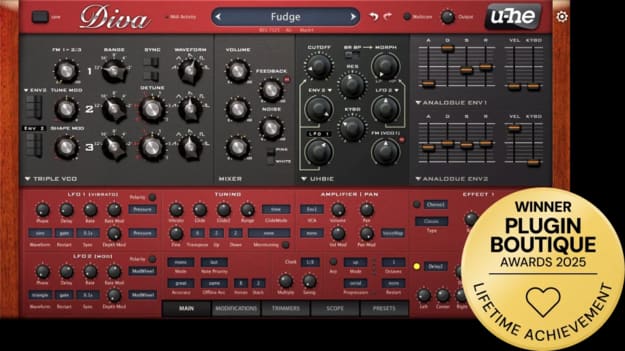
A CPU-heavy but breathtaking analogue synthesizer emulation. Five oscillator models, four filter models, each borrowed from legendary hardware. The most realistic virtual analogue available.
At a glance
Genres
The most authentic analog emulation in software versus the encyclopedic sound workstation, one perfect character against endless coverage.
Written and reviewed by Kasper Nods. Updated July 2026. How PlugPick reviews
PlugPick is reader-supported. We may earn a commission from links on this page, at no extra cost to you. Learn more
synthu-he
A CPU-heavy but breathtaking analogue synthesizer emulation. Five oscillator models, four filter models, each borrowed from legendary hardware. The most realistic virtual analogue available.
At a glance
Genres
 synth
synthSpectrasonics
A flagship hybrid synth and sound library spanning synthesis, granular, and thousands of sampled sources. The go-to for cinematic textures, evolving pads and inspiring patches across every genre.
At a glance
Genres
Diva does one thing at a depth nothing else matches: it models classic analog oscillators and filters so faithfully that reviewers say you would struggle to pick it from hardware in a blind test. Its mix-and-match modules cover Juno pads, Moog basses and Prophet-style keys, all with the organic drift and weight of the real circuits, at a real CPU cost. As u-he artist OCULA puts it, no other VST synth replicates the sound and feel of an analog synth as well as Diva.
Omnisphere is the generalist at the opposite extreme: a library of over 14,000 sounds plus a deep hybrid engine, spanning territory from playable instruments to sound design that no analog emulation attempts. It can do convincing analog-style patches among a thousand other things, and its browsing workflow is built for finding the right sound quickly rather than programming it. Artists like Tourist build and share presets for it.
These two barely overlap, which makes the choice unusually clean. Diva is a specialist instrument you play and program like a vintage synth, and for warm analog chords, basses and leads it is the most convincing plugin ever made. Omnisphere is a production workstation whose value is breadth and speed of inspiration.
If your tracks are built on analog-style synth parts, Diva gives you the real character for a third of the price. If you need many different worlds of sound on tap, especially for cinematic, ambient or crossover work, Omnisphere is the one that earns its premium.
Pick Diva if you want the most authentic analog sound in software for synth-driven tracks, and can spare the CPU.
Pick Omnisphere if you want an enormous curated palette covering far more ground than any single synth character.
Not really. Diva is a specialist analog-modelling synth you program like vintage hardware; Omnisphere is a library-driven sound workstation. They overlap only where Omnisphere approximates analog-style patches, which Diva does more convincingly.
Only if you need breadth. Omnisphere's premium buys its enormous curated library and hybrid engine. If your tracks centre on analog-style synth parts, Diva delivers a more authentic version of that one thing for far less.
Diva, for classic warm chords, stabs and basses with real analog character. Omnisphere suits house producers more as a texture and layering source than as the main synth voice.