 synth
synthXfer Records
Serum 2
The industry-standard wavetable synthesizer. Drag-and-drop wavetable editing, a world-class effects rack, and a modulation system that makes complex patches intuitive.
Serum 2 reviewed: what the industry-standard wavetable synth added, where its CPU appetite bites, and whether it's still the default buy in 2026.
Written and reviewed by Kasper Nods. Updated July 2026. How PlugPick reviews
PlugPick is reader-supported. We may earn a commission from links on this page, at no extra cost to you. Learn more
synthXfer Records
The industry-standard wavetable synthesizer. Drag-and-drop wavetable editing, a world-class effects rack, and a modulation system that makes complex patches intuitive.
★ 5 / 5
Serum 2 keeps the crown. The wavetable editing and visual modulation that made the original the industry standard are intact, the new sample, granular and spectral engines close its old gaps, and the preset-and-tutorial ecosystem remains unmatched. If you buy one serious synth, this is still the safe answer.
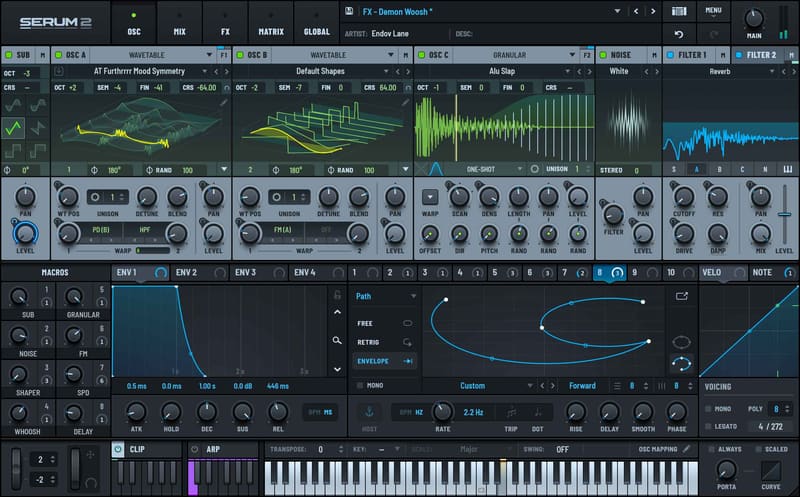
Serum's dominance was never just about sound. It won because you could see everything: the wavetable, the modulation routings, exactly what every knob was doing to the waveform in real time. That transparency made it the synth a generation learned on, and the reason a decade of EDM, bass and pop sound design assumes you own it. Serum 2 wisely changes none of that.
What it adds is breadth. Alongside the classic wavetable oscillators sit new sample, granular and spectral engines, so patches can now blend a granulated texture or resampled material with wavetables inside one instrument, territory that previously pushed producers toward all-in-one synths like Pigments or Omnisphere's hybrid engine. The effects rack and modulation system were refreshed along the way, and the drag-and-drop workflow still makes complex patches feel readable rather than intimidating.
The ecosystem argument has only strengthened. Whatever sound you are chasing, someone has built a Serum preset and filmed a tutorial for it; festival producers like Axwell walk through their own patches in the Axtone Academy series. For working producers that ecosystem is a genuine productivity feature, not marketing, it is the difference between designing a sound and searching for it.
Criticisms are few and familiar. Complex multi-engine patches cost real CPU, so older machines will bounce-in-place sooner. And for producers who only ever play presets, cheaper or free synths (Vital chief among them) deliver most of the everyday experience. But as a tool you grow into rather than out of, Serum 2 remains the reference point every other synth gets measured against.
Buy it if you design sounds seriously, learn from tutorials, or want the one synth whose ecosystem answers every "how do I make this" question.
Skip it if you mostly play presets or are budget-first, start free with Vital and revisit Serum when you hit its limits.
Xfer released Serum 2 as a free update for existing Serum owners, one of the more generous major-version policies in the plugin world. New buyers pay the normal price.
For sound-design depth, the new engines and above all the ecosystem of presets and tutorials, yes. If you are budget-limited or preset-first, Vital free covers most of the everyday ground, which is exactly why we rate both so highly.
Single classic wavetable patches stay light, but multi-engine patches with heavy unison and effects cost real CPU. On older machines, expect to freeze or bounce busy Serum tracks in larger projects.