 effect
Output
Thermal
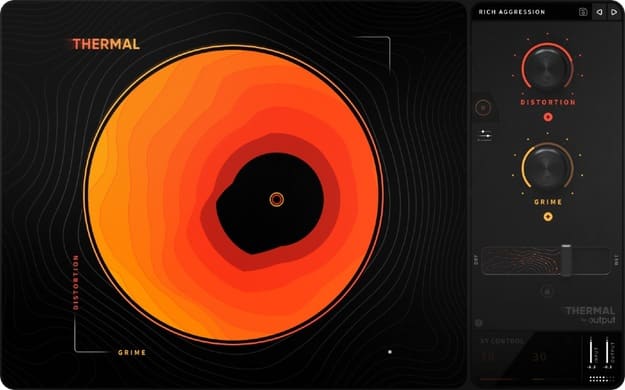
A multi-stage distortion effect with eight distortion engines in series. Goes from subtle harmonic saturation to total destruction, all with a single wet/dry knob.
Output Thermal reviewed: the eight-stage distortion plugin that turns saturation into a one-knob decision, and when you actually need that speed.
Written and reviewed by Kasper Nods. Updated July 2026. How PlugPick reviews
PlugPick is reader-supported. We may earn a commission from links on this page, at no extra cost to you. Learn more
effectOutput
A multi-stage distortion effect with eight distortion engines in series. Goes from subtle harmonic saturation to total destruction, all with a single wet/dry knob.
★ 4 / 5
Thermal takes Output's macro-first house style, the same approach that makes Portal fast, and applies it to distortion: eight distortion engines in series, dialled in with a single wet/dry knob. It won't replace a rack of specialist saturation plugins for an engineer who wants to tune every stage by hand, but for getting from clean to destroyed fast, it's hard to beat.
Output built its name on plugins that make complex processes fast rather than deep, Portal did it for granular effects, and Thermal applies the same philosophy to distortion. Under the hood sit eight distortion engines in series, different flavours of saturation, fuzz, crunch and breakdown, but the default workflow reduces all of that to one knob: turn it up, and your signal moves smoothly from subtle harmonic warmth to full destruction.
That single-knob simplicity isn't the whole plugin, though. Producers who want more control can open up the individual stages, reorder them, and adjust gain staging between each one, so Thermal scales from "drop it on a channel and turn one knob" to genuinely surgical multi-stage tone shaping when a track calls for it. The presets lean toward the former, fast, usable starting points rather than blank-slate sound design.
Dubstep producer Skream, describing his own setup, put it plainly: "I rinse the life out of the Output stuff. Portal, Movement and Thermal, I use probably on every project." That kind of everyday, non-showcase use, not a single flashy demo but a tool reached for on every track, is the most credible endorsement a utility plugin like this can get.
The honest limit is scope. Thermal does one job, distortion and saturation, and does it fast and musically, but it's still one job. Producers who already own a saturation plugin for every specific flavour they need may find Thermal's breadth redundant, and the one-knob macro can feel limiting on the rare occasion you want to automate one specific stage rather than the whole chain.
For everyone else, it earns the same verdict as Portal: not the deepest tool in its category, but the fastest route to a musical result, and at this price that speed is worth paying for.
Buy it if you want a fast, musical route from subtle warmth to full destruction, and would rather turn one knob than tune eight distortion units by hand.
Skip it if you already own dedicated saturation plugins for every flavour you use, or need to automate one distortion stage independently of the others.
It runs eight distortion engines in series but exposes them through a single wet/dry macro by default, so you get a smooth ramp from subtle warmth to full destruction with one knob. Opening the individual stages gives you the deeper control a single-flavour saturation plugin can't.
Both. The macro knob makes it fast enough for everyday mix-bus or channel saturation, and the multi-stage engine underneath supports genuine sound-design destruction when a track calls for it.
Portal is a granular effects processor for movement and texture; Thermal is a multi-stage distortion effect for saturation and destruction. Both are Output's macro-first design applied to different jobs, producers like Skream use both on the same projects.