 effect
Output
Portal
A granular FX plugin that chops, scrambles, and time-stretches any audio signal in real time. Extreme texture effects from subtle shimmer to full granular chaos.
Output Portal reviewed: what the granular FX plugin actually does well, where it frustrates, and who should spend the money on it.
Written and reviewed by Kasper Nods. Updated July 2026. How PlugPick reviews
PlugPick is reader-supported. We may earn a commission from links on this page, at no extra cost to you. Learn more
effectOutput
A granular FX plugin that chops, scrambles, and time-stretches any audio signal in real time. Extreme texture effects from subtle shimmer to full granular chaos.
★ 4.5 / 5
Portal is the most musical way into granular processing: drop it on anything and its macro-driven interface turns static sounds into moving, evolving versions of themselves. Sound designers wanting surgical grain control will hit its ceiling, but as an inspiration machine it earns its place on most producers' shortlists.
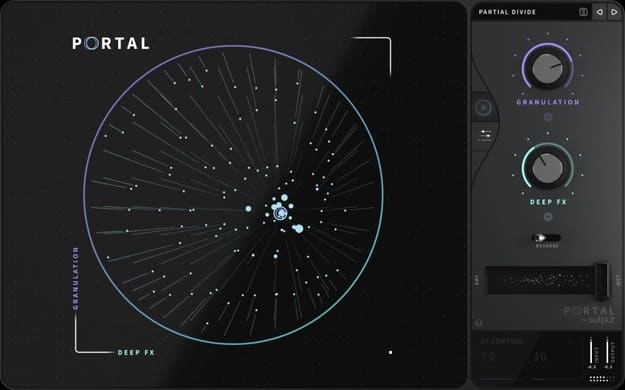
Granular synthesis has a reputation problem: immense sonic potential locked behind interfaces built for patient sound designers. Portal's whole pitch is removing that barrier. It is a granular effects processor, you run existing audio through it rather than synthesize from scratch, and its front panel is dominated by two large macro dials that sweep between states you design or borrow from presets. Turn one knob, and a plain vocal chop becomes a stuttering, pitch-scattered texture that still follows the song.
Under the macros sits a real granular engine: grain size, density, pitch and time controls, plus filters, effects and an envelope section, all modulatable. The factory presets are genuinely useful rather than demo material, split between subtle thickeners, rhythmic granulators and full sound-destroyers. Dubstep pioneer Skream is among the artists Output features using it, and its natural habitats are electronic transitions, vocal texturing, and cinematic sound design where a static pad needs to become a living one.
The honest limits: compared with dedicated granular environments, Portal trades depth for speed. You shape sounds through its macro system more than through raw grain-level access, and producers who want to micromanage every grain will feel steered. It is also an effect, not an instrument, so if you wanted to granulate your own samples into playable patches, that is a different tool.
At its price, none of that dents the value much. Most producers do not need a granular laboratory; they need a fast, musical way to make a sound move, and Portal remains the best-executed version of exactly that.
Buy it if you want static sounds to move, evolving textures, granular transitions and vocal colour, with speed and musicality over laboratory depth.
Skip it if you want grain-level surgical control or a granular instrument to build playable patches from your own samples.
It is a granular effects processor: it chops incoming audio into grains and rearranges, stretches and pitch-shifts them in real time. In practice you sweep two macro dials between designed states, turning static sounds into moving, evolving textures.
Yes, that is its main strength. The macro-and-preset workflow delivers musical granular results immediately, with the deeper grain controls available when you want them. It is the most approachable granular tool on the market.
Portal processes existing audio; granular instruments build playable patches from samples. If you want your synth lines, vocals and drums to move and evolve, Portal. If you want to design instruments from your own samples grain by grain, look at dedicated granular synths instead.